Tuesday, February 16, 2021

Some Links

I've got a couple of things on at the moment that seem to involve an inordinate amount of emailing and not much to show for all the activity (yet), as well as a pile of boring paperwork and admin-y stuff to deal with - including a surprise text from my GP today offering me a first dose of Covid vaccine - I'm getting it tomorrow. I have mixed feelings about this - it's good news for me personally, I might otherwise have expected to wait a lot longer for it, but it also looks like the only reason I've got the chance is because so many higher risk people are just not turning up for their appointments and they don't want to waste the doses. Which is obviously bad news all round. 


Meanwhile I had a couple of emails yesterday about interesting things in the offing and if I don't share them now I'll only forgot.

First up, and the one that I wouldn't have forgotten about because I've been excited about this project for a while now is the forthcoming publication of J.J. Haldane Burgess's book 'Tang' from a new Michael Walmer project - Northus. This one may be of particularly niche interest, but it is interesting. Northus is looking to bring back into print Shetland Classics. It seems really important to me that we can access our local and regional voices, traditions, and history. I am really looking forward to getting my hands on a copy of Tang. 

Next up is a podcast about Ursula Bloom, details of which can be found here. Bloom's is a name I sometimes come across, but I don't know much about her other than that she was incredibly prolific, writing under several names. One of those was Marry Essex and I do have a copy of 'Tea is so Intoxicating' from the British Library Women Writers series. The email came from Ian of Wyndham Books who are new to me, but look like they're worth checking out if you like super cosy fiction and a good bit of romance. 

Finally, there's a new documentary from Lucy Worsley about the Blitz spirit which will focus on the lives of six people who lived through it. One of the six is Frances Faviell who's books are currently being printed by Dean Street Press. There's currently a free Faviell ebook available via there website, and for a book about the Blitz they have her 'A Chelsea Concerto' which has been much loved by fellow bloggers. Dean Street have all sorts of good stuff on their list , and again are worth a look. I'll also give The Spirit of the Blitz published by Oxford University Press another shout out, it's really good, and a very useful companion to Blitz based fiction. 

Sunday, February 14, 2021

A Seasonal Round Up

These are words I never thought I'd say, but Valentine's day has cheered me up. Maybe because this year there's been a bit more emphasis on celebrating friendship, and less tat to be seen even in the shops that are open, and definitely because Covid separation is making the small things more important, the annual card from my mum meant more than ever, and the knock and run Lindt bunny from my partner really did feel like the height of romance.


Until today I've been struggling with February a bit, stuck in the same general slump that so many of us seem to be in, where everything seems to be to much effort, and my concentration is so utterly shot I'm not even reading much. In an effort to deal with the reading, because at least time with a book doesn't feel like time wasted, I've been catching up almanac's and other seasonal books this weekend and have a little round up of them.

The first is Lia Leendertz's Almanac, which is making me wish I'd started buying these years ago (whenever she first started bringing them out basically). I like everything about this, the bits about the sky perhaps most of all, closely followed by the list of significant dates for the month. My intention was to read each relevant chapter at the beginning of it's month, so it's not really surprising that it's been halfway through both times. Never mind. Something else I like about this almanac is that I'll be able to keep them like old diaries to occasionally refer back to in the future, but unlike my old diaries (appointments and the occasional note in them) they'll actually be interesting to look back over. 

Miranda York's Food Almanac (which definitely needs to be an ongoing series) is not year specific, and is just a great mix of things. Pancake day is something I'll miss marking this year - it's never been a crowd of people thing, normally just me and a friend making relative pigs of ourselves eating a few too many, and then wondering why we don't make crepes all the time, but it's become a tradition that I'll miss, and there'll be no fancy quire of paper pancake recipes tried this time. Fortunately February offers plenty of other exciting food prospects - it's still citrus season, the valentines essay here is very much about dinner for one, and there's Chinese new year which is a decent inspiration for the sort of food that's really mood lifting in winter (lots of greens and rich, just hot enough, flavours). 

Another food book, and seasonal rather than monthly (as the rest of these books are) is Gill Meller's 'Root, Stem, Leaf, Flower', but this is such a good cookbook and I've been using it a lot recently which makes me want to give it a shout out. I've wanted to reduce the amount of meat I eat for years with mixed success. I've personally struggled to find recipes that don't leave me missing meat, but this book does the trick.

For example I've always looked at swedes as very much a supporting act, but cubed and roasted with onions sage and chestnuts they are definitely a main feature (though these ones would also be great with a lamb chop). Broccoli roasted with honey and seeds and marinated in soy sauce (amongst other things) is the most enthusiastic I've ever been about broccoli (not previously a favourite). If this sounds good to you, the book is full of more like it. It's also really coming into it's own at a time when the supermarket shelves are distinctly gappy, and a couple of killer recipes for swedes are a godsend.

Finally it's Stella Martin Currey's 'One Woman's Year' from Persephone books. I bought this on my last trip to London which I think was January last year. I meant to read it month by  month, obviously didn't - and actually forgot all about it until I saw somebody mention it elsewhere a few days ago. It sort of sums up the mixed feelings I've come to have about Persephone books. I've only read the first two months (it's back to plan A for this, albeit a year late) and didn't much take to Stella in January. I liked her more in February where we found common ground over daffodils and a country walk.

It's a book with a charm to it, the recipes are fun as are the most and least liked jobs, I like the excerpts from other books too, and the way it's dated is quite interesting. On the other hand it's so very middle class, and would be better for some sort of introduction or afterword. I wanted to love this book, there's a lot in it that I feel I should relate too, but so far I've found even when I'm essentially in agreement with Stella about the value of reading to children, or visiting Libraries with them there's a sort of smug bossiness, and general snobbishness about her tone that keeps me at arms length. Maybe by the end of the year I'll know her better and like her more.

Friday, February 12, 2021

The Scribbler - A Retrospective Literary Review

I've been aware of 'The Scribbler' for a while but have only just got around to ordering a copy of the most recent number (issue 16). This was specifically because it had a literary trail of Orkney and Shetland in it. I was interested to see what books would be mentioned and what the format of the article would be like, and now I've read it I'm half planning my own literary trail for Shetland and wondering which books I'd include.

The Scribbler is a retrospective literary review with a strong bias towards old children's books and their authors - as you'd expect from Greyladies, it's also the first journal/review that I've sat down and read cover to cover in a couple of sittings for a long time. This is partly because it's shorter than the majority of the Journals I've subscribed to over the years, but mainly down to the way it's laid out with one review naturally leading to another, a short story that's thematically tied to one of the review topics, and a look at old Girls and Women's magazines that tied to another review strand. The literary trail at the end (which I obviously read first) was thoroughly enjoyable too, with a selection of books I'd mostly not come across before.


Altogether it was a treat that lasted me through perhaps 4 mugs of coffee and which I'm quite likely to pick up and read again. I can't currently justify spending money on a full subscription (it's not particularly expensive - £20 for 3 issues is very reasonable, money is just very tight around here at the moment), but the next issue has a short story by E. M. Delafield in it which is making it all but irresistible to me. 

I really like the tone of 'The Scribbler' too, it feels like a fairly tightly knit group of contributors and there's a chattiness about it that reminds me of my favourite podcasts (specifically Backlisted) and made me feel like I was being drawn into the conversation. I appreciate a review which can make a few jokes without dumbing down. 

The books being assessed here are interesting too. They're not automatically books I'd be drawn to, or seek out even now. Some of them sound like they might pose problems for the modern reader, and nobody reviewing seems shy of pointing out plot issues, but they all sound interesting and make a sound case for the value, as well as the enjoyment, to be found in genres outside of literary fiction.

The chosen short story - an E. Nesbit version of Cinderella in this edition - is the perfect example of this. It's perhaps not Nesbit's finest work, there's fairly awful dialect at play and the characters of the children seem a little unlikely, even if their actions do not. On the other hand it's genuinely humorous, twists the tale nicely, and takes a complex, but not uncommon situation, and presents it ina  way that very young children can understand - so there's really a lot going for it. 


Monday, February 8, 2021

Fly On The Wall Press

The most exciting thing about independent presses is that they can be what they want, whilst still offering a sign post for readers, and a measure of support for authors that self publishing might not offer. As a reader it's the signposting I'm really interested in, and how you find the next book to take a chance on.

Which is one reason why I like Fly On The Wall so much. I came across Isabelle Kenyon on twitter, she's someone who's energy and enthusiasm for what she does I find really inspiring, especially when it comes to the poetry that Fly On The Wall publish. Being on her mailing list has given me the opportunity to read and review a few collections that I'd never have come across otherwise. They're not very far from my general area of interests, but are also things I doubt I'd have picked up before she gave me a nudge in the right direction (in the form of review copies with the deadline of a blog tour attached - a blogging perk that I'm very grateful for). With that in mind, a month celebrating independent presses is another nudge - this time just to shout out about Fly On The Wall and try and encourage people to take a look at what they're doing. 


Fly on the Wall is a social enterprise company and a not-for-profit publisher, based in Manchester. We publish innovative short stories, poetry and photography books on pressing issues, from exceptional authors around the globe, all with a socially conscious theme.

Social action is intrinsically linked into our books, and has been since the Press was established in February 2018. Our flagship anthologies work in two ways: each sale fundraises for the chosen charity and each reader continues our conversation, tackling the issues highlighted. We are proud to publish short stories and poetry on the pressing issues of our time, being unafraid to generate conversation about perhaps 'prickly' subjects, whilst also dedicating a large proportion of our yearly publishing schedule to charitable projects. 

Which charities have we worked with so far?

Mind

Shelter

Crisis Aid UK

WWF

The Climate Coalition

Street Child United

Fly on the Wall Press guarantees that all our books are both produced and shipped sustainably. 

What does Fly on the Wall Press believe in?

Words have the power to change opinion. Expressing injustice through poetry is an important statement which cannot be undervalued. 

Why should you read and submit to Fly on the Wall Press?

Change and innovation starts with small publishers. Fly on the Wall Press publishes exciting, powerful voices which refuse to stay quiet. By supporting Fly on the Wall, you are supporting the writers of the future.

What does A Publisher With A Conscience mean in relation to your authors?

We are proud to always offered our authors up to four times the recommended royalty rate from the Society of Authors and to be transparent about both our contracts and the publishing process. The publishing industry has been quiet about money for too long! We take time to edit, design and market our books to the highest standards, always in consultation with the author. We take on a 12 - 14 authors maximum per year to ensure that each author is given the marketing campaign and publicity which they deserve. Other publishers may hand over to the author after the editing and design process, but we believe that when the book is released, the real work begins!  We are a small Press with ambition, recognised for our innovative PR campaigns by The Bookseller and celebrated at the 2020 British Book Awards.


Social Media Links:

Youtube: https://www.youtube.com/channel/UC5ESu4f1IZsZ6Hoi9bG-cmQ

Twitter: https://twitter.com/fly_press

Facebook: https://www.facebook.com/flyonthewallpress

Instagram: https://www.instagram.com/flyonthewall_poetry/


Manuscript Guidelines:

https://www.flyonthewallpress.co.uk/manuscript-submissions


(We have one annual reading period in Autumn, and we do ask that writers have read a book prior to submitting.)


Friday, February 5, 2021

Island Dreams - Gavin Francis

As a reader, if there was one thing I could change about publishing in England it would be to have one of the really big publishing houses move out of London to one of the big Northern or Midland cities. I'd love to see the kind of differences it might make to the current literary scene and the opportunities it presents at every level. I assume we'd end up with something that looks a bit more like Scottish publishing does - which in turn is why I enjoy book shopping in Scotland so very much.

Canongate and Birlinn are both independent publishers, and both are big enough to feel mainstream rather than niche. the books they publish are old, new, regional, international, cover every genre I can think of, and are consistently interesting. I don't want to read every book that Canongate publishes, but I'll pick up any book that has their logo on it's spine just to make sure. 

'Island Dreams' was a Christmas present from my mother, who to be fair knows me well enough to know that a book with Islands in the title would appeal to me* which is why it's only taken me a month or so to get around to it, rather than the entirely typical couple of years. The Canongate logo definitely helped push it up my list. 


I didn't really know what to expect from this book - it's just expensive enough not to want to take a chance on without browsing access to bookshops (how many amazing things are getting overlooked at the moment because of this?) and the 2 reviews on amazon are no help at all (somebody loved it, somebody else was disappointed). I really didn't expect it to revolve around one of the central dilemmas of my own adult life though - how to accommodate a love of small islands with my wider responsibilities and circumstances.

I would love to return to island living, but as my partner keeps pointing out I have a certain ambivalence towards it too. It's not really the logistical difficulties, although I'm neither blind to them, or altogether enthusiastic about the reality of being weather bound when you badly need to be somewhere else. It's more about what happens when you live in the place you've always chosen to escape too. Where do you escape to then when it all gets a bit much?

I'm probably going to be as unhelpful as the previous amazon reviewers in summing up 'Island Dreams', it's quick to read, almost half of it is made up of images of maps, and even when that's not the case some pages only contain a paragraph, but it's something that will stick with me and that I think I'll go back to time and again. 

There isn't a narrative as such, neither biography, philosophy, or travel writing (the categories it's listed under) really reflect it, though philosophy might come closest, and there are glimpses of Francis's life, and he does travel a lot. It's sort of a book about how we're living, how we need isolation sometimes, and the difference between that and insulation. It's a little bit about growing up and a lot about how islands can hold our imagination.

What I really liked though, is the way the book gently asks if you've considered this, or thought about it like that. The maps gave me the space to think about what I was reading, and there was the comfort of finding someone else who feels the same twin need for isolation and connectivity in turn. Gavin Francis seems to have reconciled those needs better than I have, but reading this gives me a fresh optimism that I might sort out the puzzle in a way that works for me too. 

*There was some heavy hinting in the form of an open wish list, but my present could just as easily have been some classic crime fiction, something about graveyards and/or folklore, or a book about women and art crime.

Tuesday, February 2, 2021

Stoorbra Socks and some more thinking about Independent Publishing

I finished my Stoorbra socks, I love them, everybody who's seen them (my mum and her dog) loves them, as well as a few friends and relatives who are heavily hinting for a pair (they took me just over two weeks to knit with plenty of time on my hands - people, that's quite a big ask - I'm not saying no, just that it's a proper job of work to make something like these to order). 

I also love the Shetland Wool Week Annual where I found the pattern, and The Shetland Wool Adventures Journal from which I've been cribbing ideas this morning. The Wool adventures Journal is definitely an independent venture - the brain child of Misa Hay, who is a powerhouse of inspiration and creativity. The journal is a logical extension of her business that further supports other local businesses and designers - I like everything about this.

I have a growing collection of knitting related literature, most are focused around patterns, quite a few are self published (Kate Davies, Susan Crawford, and the Trollenwol books that focus on designs using Uradale wool), and there's a healthy number published by The Shetland Times as well. My favourites are the ones that highlight a whole lot of designers - so the along with the wool week annuals and Misa's journal there are the books that the Shetland Guild of Spinners, Knitters, Weavers, and Dyers have produced. I think of the Wool Week Annual is an independent publication - it's published by the Shetland Amenity Trust, and it serves a specific purpose, so perhaps technically it isn't - but does that matter?

When I say I like everything about these journal type publications, part of that is the variety they offer me as a reader and knitter, part of it is the sense of collaboration within a community. I'm too young to think of the truck* system in Shetland as anything other than history, but well within my lifetime the rates that some knitters were being paid was exploitative which is why so many turned their back on it the moment other job options became available. Wool Week is a visible sign (amongst others) that people can the tide has turned. It might still be exceptional to make a living out of knitting and designing, but at least there's a sense that many of the people involved are doing it on their own terms.

Meanwhile the socks are brilliant. They will be my reading socks, perfect for keeping my feet warm and cozy on the sofa when I'm too engrossed in a book to move around and get the circulation going again. Or don't want to put the heating on. As I said with the first one, it's a really lovely pattern to knit - and I'm delighted to have learnt about 3 needle bind offs (genuinely excited about this). If it's maybe not suitable for absolute knitting beginners, the one size fits all approach means that it is a perfect first sock project as there's only the heel turn to tackle - no other shaping or fitting, and the Fair Isle patterning keeps it interesting all the way. 

It's not just the first sock I've knitted, but the first sock pattern that's made me think it would be worth the effort, and this is something else I like about collections from a whole range of designers - there's always the thing you didn't know you wanted to make until you see it. 


https://www.shetlandwoolweek.com/

https://www.shetlandwooladventures.com/buy/

*Knitters would be paid in kind for their garments, often in things like tea and sugar which they then needed to barter to get the actual necessities of life. It's a complicated issue - on the one hand you would get something for your knitwear irrespective of actual market demands, but mostly it exploited the knitters.

Monday, February 1, 2021

The Chimney Murder - E. M. Channon

 I put off writing about this book from Greyladies last week so that it could be part of Kaggsy and Lizzie's celebration of Indie publishers month, and because I was hoping that the copy of the latest Scribbler would be with me to talk about in the same post (also because I wanted to finish my Stoorbra socks). Unfortunately I've not seen any post for days, or much evidence of post for anybody else, so I suspect the post man might be ill, or on holiday, so the Scribbler will appear in a future post.


Trying to define what an independent publisher is turns out to be complicated, but trying to find a comprehensive list of independent publishers did at least get me thinking about what I wanted to find. When it comes down to it the advantage a small independent press has is that it reflects the passions and interests of the people who set it up. The chances are that if you like one Greyladies book you'll like a second one, and if you like two of them you can safely take a chance on anything on their list.

I haven't read the whole list, there are categories that appeal to me more than others, but every single Greyladies book I've ever bought (and they're not particularly cheap) has been a hit. Greyladies itself keeps evolving, some of the titles they reprinted at one time have fallen off the list, and they no longer seem to be bringing out new books. They've moved from Edinburgh, to Melrose, to Peebles where they're now part of Priorsford Books. I'm a little bit torn about this - I wish the whole list could have stayed in print, but I accept that isn't always possible, and there are so many people going in for reprinted 'lost' books now that it's a crowded market place.

'The Chimney Murder' is still available to order, I've had it for a while, and now seemed like an excellent time to read it. I was right. Originally published in 1929 it's funny and disturbing in almost equal measure. The Binns family live in fear of Mr Binns and his truly awful temper which makes life almost unbearable. Nothing is good enough for him, and he really does not like his neighbour Mr Marley's hens getting into his garden.

It is unfortunate then, that after loudly threatening to kill Mr Marley if his fowls wander again, Mr Marley goes missing, and (spoiler here) parts of a dismembered body are found hidden in the chimney's of the Binns house. The gruesome aspects of this are not dwelt on, so there's still plenty of room for golden age humour, but Channon keeps it balanced with the quieter domestic tragedies of unhappy marriages and homes - which here are far more devastating than murder.

The best lost books don't have to be great works of literature, the idea of the lost or rediscovered classic has, I think, become a bit tired recently. What they do need is to be both entertaining, and to have something that will always speak to the reader beyond period detail and jokes. 'The Chimney Murder' does that, Greyladies books in general do that. they're well worth hunting out whilst they're still available. 

Thursday, January 28, 2021

Marmalade

In what seems to be something of a recurring theme at the moment I've had a bit of a kitchen disaster today - one that I hope will be redeemable, I'll find out later. I wasn't going to make marmalade this year, I still have quite a bit of last years hanging around. Normally I share it, take it with me when I'm going to visit people as a gift, or just give it to other marmalade fans I like - but 2020 wasn't good for that, and 2021 doesn't look like it's going to be much better.

On the other hand I've made marmalade every January for something like 14 years now, and it's a hard habit to drop. In the end when I saw Seville oranges for sale I bought some, just not as many as usual, and decided to go for it anyway. The other tradition I have with marmalade is a complete falling away of enthusiasm for the job as soon as I get oranges - and so it was this year. I love making jelly, like making jam, get impatient with the time it takes for marmalade and chutney (but love the results). 

This is partly why I favour the whole fruit method. It doesn't take much effort to measure out the water, throw the oranges in it and start simmering them - and then you're committed. The oranges went on to soften last night, which meant today I got the sticky, slimy job of cutting them up and removing the pips (this is the tedious bit, it always takes much longer than I expect it to). 

I've always used a Jane Grigson recipe for my base, and sometimes chucked in extras (mostly booze, this year it was Cointreau for an extra orange hit), it calls for 1.5 kilos of oranges, 3 kilos of sugar, and makes 13 - 14 mixed sized jars according to my notes. I only bought a kilo of oranges and adjusted accordingly, it's made me 7 jars which is probably more realistic for a single person household. I don't know how much marmalade of uncertain vintage I'll find when I have a really good clear out of my cupboards, but it's past time I found out.

I hadn't bargained on a power cut coinciding with almost reaching setting point (or the water going off too, but that was less crucial), or considered just how differently the marmalade would behave in a smaller quantity. Which is a long winded way of saying I over cooked it. If the bits I dribbled over the work top are anything to go by this year's marmalade has a remarkably firm set; when the power came on I boiled it up again which turned out to be a bit more boiling than the smaller quantity needed.

There's a book I should be reading at the moment too, but my concentration has deserted me, so instead I'm re reading 'The Devil's Cub' for the Georgette Heyer readalong and knitting my second sock - both of which occupations are actually working out when almost everything else I touch seems to turn to nonsense right now, so perhaps I should stick with those and cheese on toast for the rest of the week. 


Tuesday, January 26, 2021

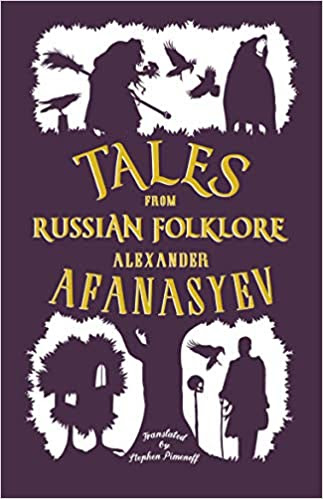
Tales From Russian Folklore - Alexander Afanasyev translated by Stephen Pimenoff

This book was on my Christmas wish list because it sounded interesting - I'd already read some of Alexander Afanasyev's collected tales in 'Russian Magic Tales From Pushkin to Platnov', but this - which still isn't a complete collection is worth having, both for it's range and for the Pimenoff's translation which makes the stories sing.


Afanasyev, following the example of the Bothers Grimm collected around 600 stories altogether, which were held to be the best from written and oral sources. Over a hundred of them have made the cut for this selection which is probably enough to be going on with, and it does at least cut out a lot of potential overlap. However great a story is, by the third or fourth version of it, it's harder to appreciate the nuanced differences. 

I've been dipping in and out of this collection since I got it, reading a few stories every day, and really enjoying it - even if all the princes are called Ivan (confusing). There are stories when the hero (Ivan) does nothing but sit and cry whilst women and animals do all the heavy lifting, stories when Ivan's behavior falls short of heroic or chivalrous, and stories where I'm cheering Ivan on. 

There are war like princesses and completely decorative ones, Baba Yaga in all sorts of moods, and Koshie the immortal, who is never even slightly sympathetic (as Baba Yaga can be), but the story that really made this collection for me is The Goat.

Mum and I have a running joke about how her dog is singing old German Shorthaired Pointer folk songs to us when she incessantly whines until she gets the toast crusts, or grumbles when other dogs walk past the window (she mumbles under her breath exactly the way my grandmother used to), and for a dozen other reasons - she's a very vocal dog. As a snapshot of family life during Covid we've sometimes put words to the dogs songs. They went very like 'The Goat' which impressed me and my mother a lot (the wider family just looked pityingly at us).

It's about a goat that sends it's wife to buy nuts but she doesn't come back so he tries to send a wolf after her, but the wolf won't go. It carries on like that for a while until something finally works and everything falls into place, but it's periodically punctuated by the refrain 'No goat with nuts, no goat with roasted nuts'. If Tally (the dog) isn't singing no dog with toast, no dog with buttered toast of a morning it's something very like, it was a profound moment of recognition. 

I don't want to over stress this, but there's something special about that - an instance of universally recognised behaviour, both annoying and somehow comfortingly familiar, that is something of a joke here, and also ties generations of readers and listeners together. Not that it's just a joke, the lament of the goat, and our dog, is the same from any hungry and bitterly disenfranchised group, as are the terms used to describe them, be they animal or human. At the moment I'd rather focus on the joke side though.

Sunday, January 24, 2021

Socks, Snow, Cakes, Lockdown

 It's been a trying week - this lockdown feels harder than the previous ones - maybe because it's a new year, partly because of Brexit, definitely because despite the vaccine the end still feels endlessly far away and the real life impact is getting harder to work around. 

I suppose it's part of aging that sometimes you need to take a bit of time to grieve just generally; for all the things that have changed and you can't get back, the people you miss, and all the other things which don't matter so much on their own, but which accumulate into significance. I don't know what the early days of Brexit would have been like without a lockdown to mask them, but I can't shake the sense of something lost, or that as restrictions lift the reality of it will be more and more dismaying.

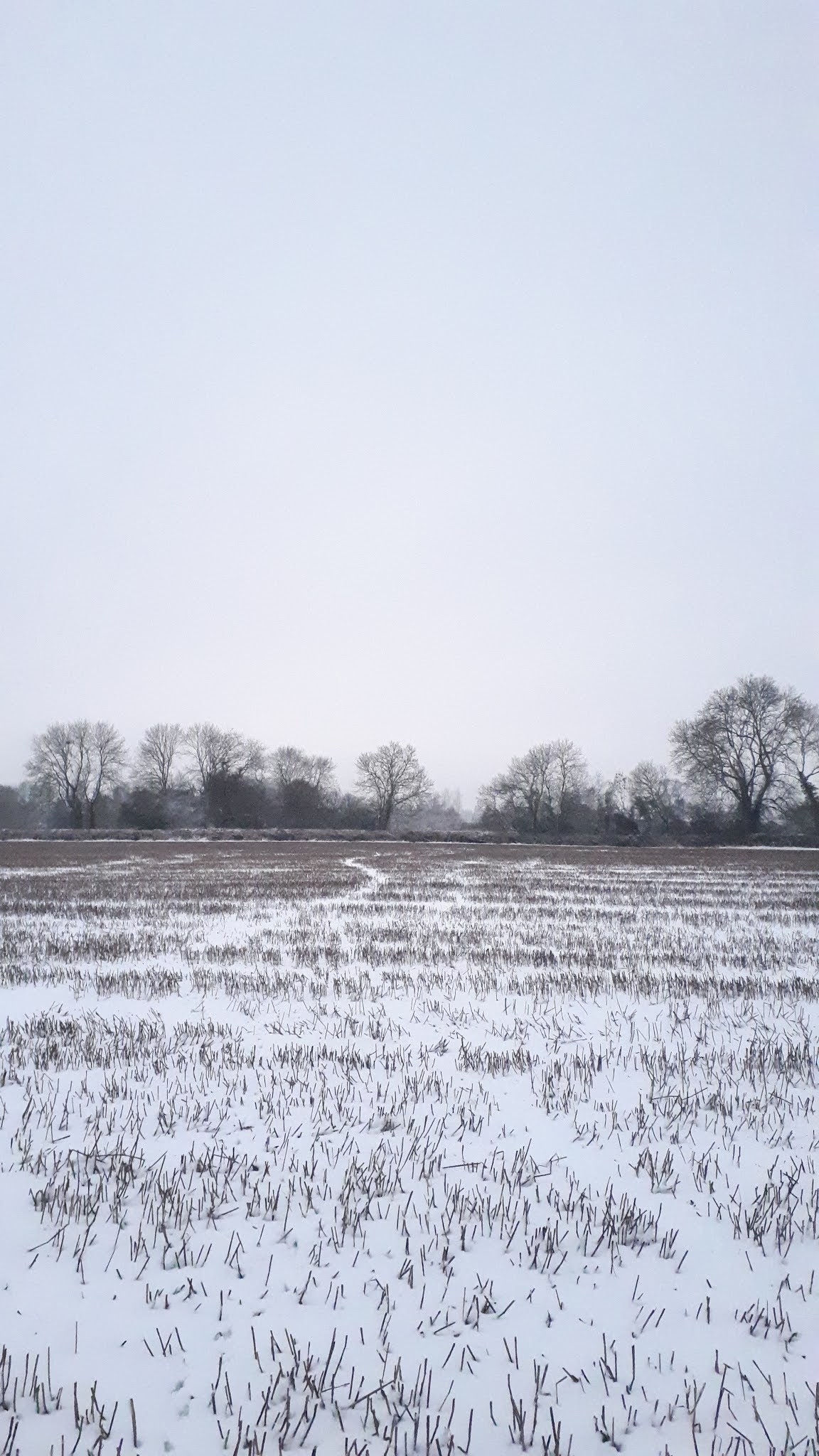
On the upside we've finally got snow, so there's a new reason to stay inside, and everything looks different - which I like. It feels like a snow day from childhood and represents a brief window to stop worrying much about anything else. In a moment I'm going to take a pause from writing this post to take a dog for a walk - for once I think I'm more excited than she is to go out. 


I've also finished my first sock (singular, I have yet to start it's mate) and am ridiculously excited about - to be fair, so's my mum. More than anything else I've ever knitted, it feels like a magic trick - yarn and needles have created this complex shape, and I've learnt how to do a few new things in the process. I've well and truly caught the bug for making them - and really wish I'd started this pattern a week earlier so that I could wear them whilst it's this cold.


The pattern is Alison Rendall's Stoorbra socks from the 2020 Shetland Wool Week Annual. They're a bed sock kind of thing - not meant for everyday wear, but for sitting by a fire with on a cold day. They're something I've wanted for a while, but given the time they take to make, have cost to much for me to buy (not over priced, just the yarn came to about £16 never mind the hours of knitting, but I'm cash poor). I love this pattern. The socks are splendidly flamboyant which makes them fun to knit, the charts are easy to follow, and so are the instructions.

I love knitting Fair Isle as well, in much the same way that I like making bread. It's such a pleasing fabric - warm, soft, unexpectedly water resistant, usefully wind resistant. It feels like something that's been made for a very long time, the colour and patterns adding artistry to the practical elements. 

At least the sock turned out well - in contrast to this weeks baking. A cake for my mother's birthday worked in the end, and against the odds after a stupid mistake about how much flour needed to go into it that meant a scramble of adding other ingredients until the texture of the batter looked promising. Baking is not an exact science unless you want to replicate something. Mum thought it was one of the nicest chocolate cakes she'd ever had - I have no idea what really went into it in the end so can't make it again.

It was the scones which were a real disaster though. The self raising flour jar turned out not to have self raising flour in it, so we ended up with leaden lumps of dough (the dog enjoyed them, but she's not even a little bit discerning). In normal times it would be nothing to go to the shop and replace it, but irresponsible in a lockdown. Making a decent scone is a point of personal pride so this maybe annoyed me more than it should.