Tuesday, September 10, 2019

Gin and Murder, A Rob Roy, and thoughts in cocktail parties

There are a couple of reasons why I'm pairing a whisky based cocktail with 'Gin and Murder', the first being that gin feels in bad taste being the drink of choice of a central character who is an alcoholic. The second is that I consider the Rob Roy and its cousin (the Manhatten) a brilliant cocktail party option, and this book more or less opens with a cocktail party.

Originally published in 1959, 'Gin and Murder' is well worth seeking out. Josephine Puillein Thompson is better known for children's books, but this one is very definitely for adults. It gives a brilliant description of the 1950's county/horsey set, as well as the damage that alcoholism does in a portrayal that's both brutal and sympathetic. It's more usual to see excessive drinking glamourised, so this portrayal is important in a bit of lightish crime fiction. It's also an intriguing mystery - so wins on all counts.

The Rob Roy is half and half scotch whisky, Italian (red) Vermouth, and a dash of Angostura bitters shaken over ice and strained into a cocktail glass. Get a good vermouth (cocchi or cinzano 1757 rosso are my current favourites) and a decent blended whisky. I like Grouse for this, but keep meaning to try it with something a bit smokier like Johnnie Walker Black Label. Whatever you choose, with so few ingredients they need to be good.

Which brings me, possibly not for the first time, to some observations about hosting a cocktail party. I have known houses with purpose built bars in them (my grandfather had one complete with a sink and fridge - it really was a bar. We thought it was tacky, and it was, but I kind of see the point of it now that both he and it are long gone) but it's not common. You could make what you liked, as you wanted it, and had somewhere to clean equipment as you went along whilst still being part of the party.

Without that luxury one option is to make batches of cocktails beforehand and keep them in the freezer - perfectly sensible and a lot of the classics (like a Rob Roy, or any sort of Martini for example) are perfect for this. There's some specific suggestions in 'A Spirited History of Vermouth' along with some bar tenders tips as well.

Whenever you make the drinks though, the key is to limit the choice - otherwise all your measures, shakers, stirrers etc need washing between each drink which is a massive nuisance. Another advantage of limiting the options is that you're less likely to end up with a lot of sticky, bottles half filled with things likely to deteriorate horribly before you get round to using them again, and it's easier to control the costs.

I've seen a lot of people blow hundreds of pounds chucking a whole bars worth of spirits in a shopping trolley over the years, and whilst I'm not complaining about the spend I really do think less is more. Pick something to build your drinks around - in this case a good Rosso Vermouth, choose no more than a couple of options, make them well, and minimise the work you create for yourself.

Monday, September 9, 2019

Casino Royale with a Vesper

When it comes to Bond I prefer the films to the books. I'm not sure if the films are still the events they used to be, but I have early memories of being taken to the cinema to see Roger Moore era Bond (he's still my favourite) and how much we loved the special effects.

The only one of the books I managed to get all the way through was Casino Royale, but I do find Fleming's descriptions of food and drinks interesting, and the Vesper (which fortunately for me is in Casino Royale) still gets people to buy Lillet Blanc. Unfortunately it's Kinna Lillet that Bond specifies, which is no longer made, Lillet Blanc isn't as bitter so isn't the ideal substitute.

Hands up, I did not know this before I read 'A Spirited Guide to Vermouth', but at least I do now know that Cocchi Americano (the white one that I need to order online, not the pink one that I can buy in Waitrose*) is considered a reasonably accurate substitute.

There are a few other things that have changed since Fleming wrote Casino Royale - he specifies Gordon's Gin which has dropped its abv. Because the Vesper is shaken, not stirred, you get more dilution, so the change in abv matters a bit. If you can get Gordon's export strength great, if you can't a lot of people recommend Tanqueray, or you could look for a stronger vodka. Bond tells the barman that a grain vodka is better than the potato vodka he's used, so Smirnoff Blue Label would be perfect.

Vodka is another tricky beast, roughly speaking grain vodka will be crisper, potato based vodkas are creamier in the mouth. Fruit based vodkas (Chase do one made from apples, Ciroc is made with grapes as examples) retain a subtle but distinctive hint of their origins. The differences are more noticibly when you taste the products side by side. Personally as long as the abv is at least 40% I'm more or less happy with any mid range brand for cocktail making.

So - a Vesper is a mix of gin, vodka, and Cocchi Americano shaken over ice, and garnished with a strip of lemon. Bond specified 3 parts gin, 1 part vodka, 1/2 a part Kinna Lillet. The Wikipedia entry on the Vesper is worth a read.


*The recipes I've looked up, including Bevan's version in A Spirited Guide assume you know that Cocchi do more than one Americano, and that you will need the one that doesn't have nationwide distribution. I'm not convinced that this is obvious, but I'm pleased to know there is a good substitute for Kinna Lillet out there when I want it.

Sunday, September 8, 2019

High Spirits with Corrected Coffee

It's 8.30pm, pitch black outside, cold enough that I've got an extra blanket on my bed, it's meant to rain tomorrow, and the met office app has updated its cover picture to an autumnal scene. It's time to put the kettle on and pull some ghost stories off the shelf.

I found Robertson Davies 'High Spirits' in a charity shop a year or two ago, came home all excited because I love Davies, and never got round to reading it. I could go as far as to say I'd forgotten all about it (otherwise I would have joined in with the recent Robertson Davies reading week) but it fell on my foot when I pulled out some of the British Library tales of the weird collections earlier looking for just the right book for a Corrected Coffee.

'High Spirits' which promises to mix parody with true scariness and features one story with a haunted bust of Charles Dickens sounds perfect to me, and I'll also put in a word for the Gothic Tales of Mary Elizabeth Braddon, or any of Edith Wharton's ghost stories, or E. F. Benson's (because I'm now remembering just how very good he is too).

A corrected coffee (caffè corretto in Italy, carajillo in Spain) would not traditionally be made with vermouth. Grappa, sambucca, brandy, whisky, or anisette would all be more usual but coffee gets on well with all sorts of alcohol. Jack Bevan's suggestion of using a full bodied, sweet, vermouth (he suggests something like Cocchi Vermouth de Torino - which is my current favourite - or Sacred English Spiced Vermouth, which I really want to try) is a winner.

The recipe is simple - a double espresso topped up with vermouth, but there's a lot of fun to be had matching the characteristics of your preferred, or current, beans with your vermouth if you want to take it seriously. You could also pour this over ice cream to make an affogato.

I love a slightly boozy coffee, with the emphasis on slightly, the point of it is to feel self indulgent rather than tipsy. It's a signal that you're settled for the evening as well as being a thoroughly grown up pleasure. This is aromatic, rich, and about as dark as the night outside, so it really is my perfect gothic ghost story companion.

Saturday, September 7, 2019

Rebellious Spirits with Ersatz Vermouth

Ruth Ball's 'Rebellious Spirits: The Illicit History of Booze in Britain' (looking at a major online retailer it seems that the subtitle of the paperback is slightly different) is what set me off on thinking about ways to match booze with books. What Ruth does in it is explore the less legitimate history of drinking in Britain along with recipes for drinks which recreate something of the flavour and atmosphere of whatever bit of history she's discussing.

I had almost forgotten how good it was when I picked it up to read about early winemaking. I knew there were recipes for the sort of sweetened, spiced, wines that the Romans drank, and wanted to compare them to vermouth as we know it.

The link is not as strong as I would like, the Roman version being altogether sweeter, and not much more than a way to make rough, acidic, wine palatable. Those might be the roots of vermouth (in that it's spiced), but they're deep roots. Vermouth as we know it derives its name from wormwood which until really very recently had to be an ingredient - bitterness has always been an element in its make up.

The chapter that deals with the Second World War gave me something else to think about though. It's easy enough to find recipes to make your own vermouth. There are plenty online, and I've come across a couple in my own Cookbook/drinks book collection. Jack Adair Bevan gives thorough instructions along with a lengthy recipe in 'A Spirited Guide to Vermouth'.

Making your own might make sense if you're planning a largish event (or if it's something you want to do) but it's quite an investment in time, effort, and ingredients. I have a lengthy wish list of vermouth's made by professionals to try before I get to wanting to make my own.

On the other hand in a worst case Brexit scenario, Ruth Ball's recipe for a wartime substitute for dry vermouth (essential for a Martini) might be useful. The original came from the memoirs of Dr John Lewis who had been a doctor on occupied Jersey. He had access to tincture of quinine and tincture of gentian. Neither are easy to find now, so Ruth's version uses 1 tbsp of tonic syrup*, 1/2 tsp Angostura bitters (which contains a reasonable amount of gentian) 1/4 of a bay leaf, and 500ml of dry cider. Mix everything together in a bottle (a screw cap wine bottle would do, probably sterilise it first) leave it for 3 days, strain well before returning to the bottle, and hope for the best.

Even if the cider concoction doesn't sound tempting, 'Rebellious Spirits' is a brilliant book - funny and informative - it's definitely worth reading.

*Tonic syrup is reasonably easy to find and is worth a try. It is incredibly bitter despite a hefty amount of sugar in it. The one time I used it to make a hot version of a gin and tonic I had to add even more sugar to the mix before I could get customers to embrace it. It was fun to play with, but it's made me think twice about tonic water as my mixer of choice.

Friday, September 6, 2019

The Futurist Cookbook with an Americano Shandy

I first heard about Filipino Tommaso Marinetti's 'The Futurist Cookbook' as a History of Art undergraduate when the idea of an Italian artist dissing pasta seemed every bit as anarchic and amusing as Marinetti could have hoped for. At the time I might have been known to drink to much extra dry Martini (at room temperature as well, god help me, until one night I drank far to much of it and didn't touch Vermouth again until I'd become a proper grown up) which was probably also in the right general spirit.

Despite some intention at the time I never did read 'The Futurist Cookbook' (and had to remind myself what Italian futurism looked like) so when I found a smart Penguin modern classics copy of the cookbook in a second hand shop recently I was very pleased. It's a curious book, first published in 1932 when Marinetti's nationalism would maybe have seemed less troubling it sets out to be deliberately provocative.

I've found it's best dipped in and out of, a little Marinetti goes a long way, but in small doses it's startling, poetic, whimsical, and very much in love with the promise of modernity and the idea of velocity. It also mentions vermouth (along with a whole host of other Italian wines and liqueurs) quite a bit and is definitely a book best enjoyed with a drink of some sort in hand.

I wanted a drink that sounded suitably iconoclastic to suggest to go with it and the Americano Shandy* fits the bill. Roughly speaking an Americano is produced in the same way as vermouth, but has more bitter components. It's name derives from the French, amer (bitter). This drink is also a sort of cousin to the Negroni.

It's probably time to confess again that I still don't like Campari, or the Americano family and I'm not sure I ever will, so I haven't tried this. If you do like a negroni though, or Campari generally, it's got to be worth a try. These quantities serve 2.

Take 25ml of Campari and 25ml of red vermouth, split between 2 glasses, add ice, and top up with 330ml of lager. Stir carefully to mix (there's advice on this in the Sipsmith book - they suggest using a bar spoon and lifting it up and down a couple of times to preserve the fizz) and there you have it.

*I found the recipe in 'A Spirited Guide to Vermouth', it's by Kate Hawkings, author of 'Aperitif: A Spirited Guide to the Drinks, History and Culture of the Aperitif

Thursday, September 5, 2019

Vermouth and Sip (possibly more of a gin post)

I'm not generally a fan of brand tie in cocktail books (Fever Tree and Seedlip have both produced them reasonably recently, neither particularly tempted me, the Fever Tree book is currently going cheap in The Works bookshops for any interested U.K. based readers) but 'Sip' from Sipsmith Gin is an exception to prove the rule.

Sipsmith make a habit of being exceptional*, they more or less made the current Gin renaissance possible. When they finally started production in 2009 they were such a small operation that it had taken 2 years and a change in the law for them to be able to do what they did (before 2009 if your still capacity was under 1800 litres it was more or less impossible to get a licence thanks to nineteenth century laws designed to improve the quality of Gin then flooding the cities).

It's easy to overlook Sipsmith on a supermarket shelf now, but it's a really good quality Gin, one that won't let you down, and is great for mixing with (other gins I'd put in this class are Martin Millers and 6 O'clock gin). Coming in under £30 it's at the premium end of the market, but you can spend a lot more without getting anything noticibly better for your money. You also get a gin that you can genuinely enjoy neat which is more than I might say for a lot of the cheaper ones.

'Sip' which is only just out is subtitled 100 Gin Cocktails with only 3 ingredients, it could be viewed as a cleaned up and streamlined take on 'The Savoy Cocktail Book', it has a lot to recommend it (at least I think so, but then it conforms to all my preferences). It also gives a brief history of gin, and a genuinely useful guide to bar equipment and glassware.

Because a lot of the cocktails are classics, or riffs on classics, Vermouth features frequently with proportions better calibrated to modern tastes than the early cocktail and bartenders guides give. Using just 3 ingredients for each drink also means that each element gets to shine (hence the importance of using a good quality gin, and a good fresh vermouth as well). Everything in here is easy to make, and make well, at home.

*This is all my genuine opinion, nobody is giving me free Sipsmith gin (though I'd welcome it if they did) and I bought the book. I'm also going to recommend the Sipsmith website for its cocktail section which I've used a good bit for work in the past when I've wanted inspiration for customer tastings.

I've also had to give myself a mental shake reading through this book because there's so much in it that would have been perfect to try out on customers and I'm just not going to get the opportunity now. At least not with my current customers, and I'm a little bit sad about that. These drinks based posts have always been a lot about work, the research for them feeding directly back into my day job.  Writing this series is really bringing home to me that I really don't know what I'm going to do next.


Wednesday, September 4, 2019

Vermouth and The Savoy Cocktail Book

Regular readers will possibly have picked up on my affection for 'The Savoy Cocktail Book', it took me a while to commit to buying it (and when I finally decided it wasn't a gimmicky sort of thing but a book I needed it was between printings, which was annoying) but it's turned out to be really useful.

I have a few (reprints of) classic cocktail books which I use quite a lot. They're really good at taking you back to basics and providing an excellent set of tools for understanding how cocktails work. The Savoy book is the most comprehensive of the ones I've found, and has thoroughly earned it's classic status.

There's definitely some rubbish in there, and it can be light on detail - possibly because there's an assumption that readers will know certain things which are no longer common knowledge. Crucially though it underscores the difference proportions make - a little more, or less, of something and it has a different name - sometimes this feels like a bit of a swindle, but when it comes to mixing vermouth into something it makes a real difference (initially it surprised me how much). The other surprise was that I would like two drinks equally as much, but for entirely different reasons based on the proportion of vermouth in them.

The second thing that The Savoy book does is encourage you to mix different types of vermouth together. I wouldn't think of mixing anything else in quite this way (I wouldn't mix a peated and unpeated whisky, or a gin with a flavoured gin, or a red wine with a white etc, so it does feel a bit odd). You live and learn.

Without this book I probably wouldn't have bothered with 'Italian' (as far as I can work out this meant red/Rosso in the 1930s) Vermouth, which turns out to be the style I'm most excited by. That's partly because of a total lack of enthusiasm for Campari and by extension, Negroni's which currently has to be the most popular cocktail on the block. I really do like Manhattans though. And I'm becoming fairly committed to iterations of Gin and 'It'.

This is also a great book to take on a family holiday where drinking is likely (I took it up to my father's this summer which was definitely fun). A home, or holiday, bar that has Gin, a blended whisky, a couple of vermouth's, a bottle of bitters, and maybe a triple sec or similar along with a whole lot of citrus fruit will give you plenty of options. A pre dinner cocktail is an excellent holiday tradition.


Tuesday, September 3, 2019

What is Vermouth?

This should perhaps have been the first post in this series, but it was only when I was talking to someone this morning that I was reminded what exactly vermouth is, isn't exactly common knowledge.

The short answer is that it's a fortified wine flavoured with various botanicals, herbs, and spices. The long answer is a bit more complicated. It takes in a whole host of styles, as well as closely associated drinks - Americanos, Chinatos, Barolo Chinato, and Amaro's. Americano, like Amaro are bitter drinks (think Campari or Aperol). Chinato is more like vermouth, and maybe easiest to think of as having a more medicinal history, they have chinchona (quinine) as a major flavouring, so again more bitter than vermouth tends to be.

It's easy to get confused amongst all this, even more so because only a very few of the very many styles are likely to be easily available to us on the high street. My local M&S sells one Vermouth, Tesco has an own label range that I don't find inspiring, Waitrose has a better selection, which if limited if you want to seriously explore, does at least have a lot of things I like, my local wine shop is equally limited, though again with a couple of good things in it.

Serious exploration calls for a more expert guide (I'm recommending 'A Spirited Guide to Vermouth' again, which lists a whole range of products) a good book on the subject is definitely helpful. It will definitely help with drawing up a wish list of styles or specific products, which will then call for a whole lot of research regarding where they can be bought (and possibly if they're worth investing in).

The origins of vermouth as we know it now are mid 18th century, but the history of fortifying and flavouring wine goes back a great deal further. Coming at it from a British perspective, and as a woman of a certain age though Vermouth has a specific set of associations. I'm old enough to remember the Martini adds of the late 1970's/early 1980's which gave it a sort of continental glamour, but with a distinctly tacky edge. Competing with that is an altogether more sophisticated image of pre war glamour fuelled in equal parts by P G Wodehouse and the Savoy Cocktail Book.

I'm interested in the current renaissance in Vermouth making (I'd particularly like to try some of the things Sacred are doing) but they are comparatively expensive, and they don't have quite the same romantic appeal to me that some of the old brands have.

It doesn't take long with something like The Savoy Cocktail Book to realise what a big deal Vermouth was in the 1920's/30's cocktail world, and only one Martini where the proportions are 1 part dry French Vermouth to 2 parts gin to give that flavour a particular association. I like the older brands of vermouth for the same sort of reasons I like classic scents from old perfume houses.

Chanel N°5 might have been through various updates and reformulations but at its heart there's still all those decades of glamour, it and its sisters of a similar vintage have a complexity that's very distinctive. Vermouth does the same for me in terms of flavour.

Monday, September 2, 2019

Vermouth in the Kitchen

For years the main reason I had a bottle of vermouth to hand was principally for cooking with, generally Noilly Prat or Dolin Vermouth de Chambéry. Both are dry vermouth's, and I'd happily substitute either into a recipe that called for dry sherry, Marsala, or even dry white wine. They're not interchangeable, but they have enough in common not to be totally incongruous when they're swapped around. I'm certainly not going to open a bottle of dry sherry if I've got Vermouth on the go and vice versa.

Partly because I saw it primarily as a useful ingredient, but also because of an occasional prejudice against sweeter drinks, I sort of assumed I would only like dry white vermouth which meant years of missing out on the Rosso's which it turns out I love - but have a different role in the kitchen.

It's a dry French vermouth that would go into a classic sort of Martini, it also works really well with tonic water and a wedge of lemon for a lighter alternative to gin and tonic. It's worth trying with soda water if you want to reduce the sugar content as well as the alcohol. It's pretty good neat too - Jack Bevan recommends Nocellara olives and a slice of lemon on the side with Noilly Prat.

Again, before reading 'A Spirited Guide to Vermouth' I hadn't considered drinking it with tonic or soda as a long drink, but it was a happy discovery. The perfect spritzy drink for the cook who forgets vital ingredients half way down a G&T, and can't be trusted with a sharp knife by the 3/4 mark (which would be me).

I'm currently playing around with a bottle of Belsazer's summer edition reisling based vermouth (it has a pineapple flavour which makes it unlike anything I've ever encountered before. It's a sweeter Vermouth than I'd normally buy (this is down to 'A Spirited Guide...' as well, it sounded so intriguing it was the one bottle I had to try). I think it would be excellent instead of Sherry in a trifle - its flavour profile would add something really interesting, so that might be a plan for the end of the bottle.

Diana Henry talks a bit about how chicken loves alcohol in 'A Bird in the Hand' and how we haven't really been in the habit of considering alcohol as a store cupboard staple for cooking with. We probably should though. It's an easy and quick way of making a simple, in this book chicken, dish into something luxurious (she gives an excellent set of guidelines for this). A good dry vermouth is just as handy when it comes to fish, and has its place with pork too. If a bottle wants finishing (but before it's gone to far over it's best - if you wouldn't drink it with pleasure don't cook with it) There are worse places for it to end up in than a gravy.


Sunday, September 1, 2019

Vermouth

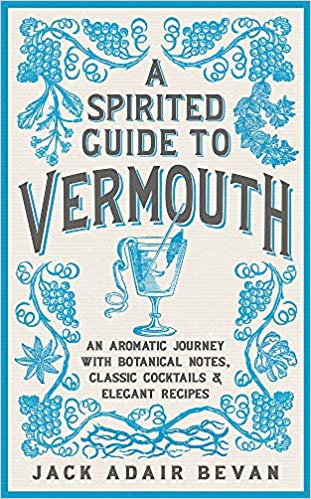
Something that I had planned for this summer was to really explore vermouth. I've had at the back of my mind to do so for a while, trying the Regal Rogue range at a trade show last autumn pushed it up my agenda, and Jack Adair Bevan's book, 'A Spirited Guide to Vermouth' which came out late spring made it feel like a matter of urgency.

Unfortunately circumstances interfered; impending redundancy has put a check on extravagant vermouth buying, and made getting the product knowledge less of a motivating factor. On the other hand I still think this is one of the most exciting drink categories around, it has something of the rediscovered/forgotten/rescued classic vibe about it which is still such a trend in publishing, and I've still got a lot to add to the bits I've already written about it.

Vermouth is undoubtedly becoming more fashionable, but that fashion hasn't really reached Leicester yet. The rise and rise of the negroni is helping to rehabilitate Rosso styles (sales of Campari have increased dramatically in the last few years, gin has been massive for a while now, I sell a good bit of Campari's pre mixed negroni, but nothing like the same amount of vermouth, which makes me worry about what people are using when they mix these things at home) but there's still a reluctance to spend more than a minimum, and no sense that people are really embracing vermouth on its own terms.

This is really worth doing, there's a lot to discover and a lot to be enthusiastic about. There are also a couple of basic things to keep in mind. The first is that Vermouth doesn't keep indefinitely once it's open. A bottle is going to be best drunk within about a month, there's no need to overdo it, but it wants commiting to. The second thing is that it's worth spending a bit of money on a good brand.

That doesn't mean that every bottle has to be a £30+ obscure artisanal masterpiece, or anything like it,   just that it's not worth cutting corners. Vermouth will have a considerable impact on whatever drink it's in, so don't compromise on quality. The major brands are a reasonable place to start, they've not survived for such a long time by being terrible.

I'm also going to recommend 'A Spirited Guide to Vermouth' again - it's a fascinating book written by someone who is obviously an enthusiast as well as an expert, and it's a really good guide if you want to be quite adventurous in your vermouth exploration.