Tuesday, November 7, 2017

Portrait of a Murderer - Anne Meredith

The only thing that surprises me about the number of murder mysteries set at Christmas is how few uncles or siblings get done in (anyone else who has seen a very drunk uncle wandering the halls not even decked in so much as a sprig of holly will understand). Meanwhile there's something reassuring about the recognition that gathering your nearest all under one roof might be a bit stressful (though the most dramatic thing, apart from the naked uncle, that's happened in my family at Christmas is a bout of tears and a melted chopping board).

Not so the Gray family in Anne Meredith's 'Portrait of a Murderer ' where the family return from church on Christmas morning to find their patriarch, Adrian Gray, dead in the library. The reader has already witnessed the murder and knows the who, how, and why. When it becomes clear that it really was murder the rest of the family have a pretty shrewd idea as well, but more than one person had motive. Will the carefully manipulated evidence be enough to get someone else hanged?

The Grays are a fairly unpleasant bunch - an ambitious politician who wants money from his father to pay of his mistress and buy a peerage, a dodgy financier as a son in law who wants money to stay out of prison and his vain and shallow wife, a bitter daughter to keep house, another steeped in depression after her marriage has been a conspicuous failure. A younger son who could be a promising artist but has married a woman who's dragging him into the gutter, and a father who didn't much care for any of them.

What makes this book so good is the way that Meredith draws each character in their own specific unhappiness making it clear that some can find their way back to happiness, but others will not depending on the person they are and what it is they hold most dear.

This is a darkly compelling murder mystery with a real emphasis on dysfunctional family dynamics, and it's absolutely perfect for reading on a dark winter night and making you grateful for the imperfect family you have. It's a fine choice for the 50th book in the British Library crime classics series - one that feels like a genuinely lost gem rather than an interesting curiosity (I like both sorts, that's not intended as a criticism) for the way it explores what the right thing to do is when you have split sympathies and more than one person is seriously guilty of something.

Sunday, November 5, 2017

1968 Book Club - Cousin Kate - Georgette Heyer

My relationship with Georgette Heyer has now spanned more than 30 years, in which time I've re read most of her books a number of times, and each time I find something new to think about in them. Choosing Heyer for Simon and Kaggsy's book clubs started as an easy option, but I've come to really welcome the chance to have a title picked for me, and the added dimension that thinking specifically about the year it was written in gives my reading.

1968 was an eventful year - the Vietnam war, Prague spring, huge student riots in Paris, assassination of Martin Luther King, the Cold War rumbling on in the background, and Rosemary's Baby showing in cinemas. It's also towards the end of Heyer's life and writing career, she died in 1974, and a long time since she published her first book in 1921.

Her later books are not generally considered her best, not least because she piles in a lot more slang, and in the case of 'Cousin Kate' there's a lot less of her trademark humour as well. That I have a fondness for it at all is because it's set in Leicestershire- her fictional Staplewood is somewhere near the real Market Harborough (just down the road, and still a charming market town, the Angel coaching in that she mentions is still in business too).

Cousin Kate is 24, unmarried, bought up following the drum with her military father across Spain and Portugal, orphaned, penniless, not especially well educated, and very pretty. The respectable occupation open to her is as a governess, but she's too young, too pretty, and not well enough qualified to to find a job easily. When we meet her she's just been sacked after her employers brother made a pass at her.

She's staying with her old nurse looking for any kind of work, when Sarah (the nurse) decides to contact Kate's half aunt in the hope that she'll do something for the girl. What she does is turn up, sweep her away to Staplewood, and keep Kate there with her much older invalid husband, and her disturbingly volatile son, Torquil.

It's clear from the beginning that all is not well with Torquil, it's so long since I first read this book that I can't remember when we're meant to work out that he's insane but there's a brooding gothic atmosphere from the beginning that makes the mood of this book radically different from Heyer's other romances.

I'm going to skate over Torquil's madness and the way Heyer depicts it, and simply accept that she wants him to be both genuinely menacing, but also an object of compassion. I'm more interested in her decision to set the action some years after Waterloo becaus I think it's telling that Kate came unscathed through her experiences following an army across Europe, but meets real danger in peace time. It certainly seems to reflect the uncertainties of the late 1960's.

Happily, Kate meets and falls in love with Philip, Torquil's cousin. So she doesn't have to dwell on the bleak picture her aunt paints when she tries to persuade Kate to marry her son and provide an heir for the estate before he has to be committed. We can dwell on it a bit though because this is one of the things I find particularly interesting about Heyer.

Her father died when she was quite young, at which point she supported her family with her writing. She continued to support her brothers throughout their lives, and when her husband decided to retrain as a barrister it was the money that Heyer earned that payed for that and kept her family afloat. She certainly knew plenty of other successful women writers who must have essentially have been doing the same thing, and given the time she lived in must have known plenty of other capable, successful, women. She would also have seen those jobs go back to men after both world wars.

Even in 1968 the expectation would have been that most women would leave work when they married, and that marriage was a suitable career for a nice middle class girl. (My mother, born in 1950, got the sort of education that prepared girls to be efficient wives for professional men, rather than to have careers - there was no expectation or encouragement at all to go to university, or to dream of any sort of career as far as I can tell.) From a strictly practical point of view Kate could do worse than marry Torquil (provided he didn't strangle her on the wedding night) he could be quietly hidden away in fairly short order, leaving her to enjoy wealth and security in peace for the rest of her days.

Not all of Heyer's attitudes stand up to close scrutiny (she can be a snob, some find her high Tory attitude troublesome, she does occasionally sound distinctly anti-Semitic) but I don't doubt that she's making the point that women were still getting a pretty raw deal in the career stakes when she wrote this, and that it wasn't good enough. She even makes it clear that whilst Aunt Minerva is the villain of the piece, she's also in her way the victim of a bad marriage. A strong willed, ambitious, woman has married a weak man because it's the only option she had. He's given her little scope for her abilities, and wilfully ignored the tragedy unfolding in his own family (he warns Kate not to trust her aunt, but offers her no practical assistance). Minerva may be a cold and selfish woman but I'd argue that Heyer depicts her ambition as a positive attribute, albeit one that's disastrously misdirected.

I'm pleased to have had the push to reread this one. It will never be my favourite Heyer, but thinking about it against the background of when it was written has certainly made me reassess it, and I've found a much more interesting book than I expected.

Saturday, November 4, 2017

The Reivers - Alistair Moffat

Over the last 14 years or so I've come to really love the Scottish Borders. It's a part of the world that's beautiful, has its own feel (neither Scottish or English, but distinctly Borders), a sense of history, and gains a stronger hold on me every time I find myself there. Sadly that's not been at all often this year, but we did spend I night in St Boswells on the way back from Inverness, and whilst there it would have been rude not to go to the bookshop on Main Street. Once in the bookshop buying something was inevitable.

I chose Alistair Moffat's 'The Reivers' because it seemed high time to become better acquainted with some of the history of the area. The remains of the great abbeys at Jedburgh, Melrose, and Dryburgh, along with the significant church ruins at Kelso speak of an historic affluence. That the place is thick with country houses (including Manderston with its silver staircase), to the extent that it feels like half the peerage must have a bolt hole in the vicinity suggests there's still money on those hills (and definitely in the salmon rivers). The distinctive Peel towers that pepper the landscape however hint at rougher fortunes. 

I suppose I had an image of the Botder Reivers as vaguely romantic robber barons who went raiding into England (encouraged by their womenfolk presenting a dish of spurs when the larder was bare as a hint to go out and steal some cattle - but that's pure Walter Scott territory). The reality is much more interesting. 

Moffat paints a picture of an area that from the earliest times had its own distinct identity, Borderers from both sides had more in common with each other than with their compatriots in the south or north, it's a useful reminder not just of how divided Britain is, but how deep the regional differences are within England and Scotland. 

The Border families, especially on the Scottish side, are generally referred to as clans, but Moffat makes the point that it's the surname that's all important to identity here (for highland clans there's also a deep allegiance to the land), and he refers to the riding families as Surnames - all incidentally still common in the area. Through alliances with neighbouring surnames the heidsmen of these surnames could put thousands of men in the saddle and have them on the march within hours. These where essentially small armies, and the families seem to have felt no particular loyalty to whoever their actual monarch was. 

Understandable when you live on the frontline between warring nations, far enough away from the seat of government to avoid close scrutiny, and powerful enough to make to much interference with you inadvisable. It wasn't a great place to try and make a living as a farmer though. When the little ice age wasn't doing for you, it seems somebody was always setting fire to your home, stealing your live stock, or trampling your crops. 

It's an entertaining journey through a period of history as brutal as it was colourful. The book is full of all sorts of asides, and Moffat clearly loves the region (his affection for it has deepened mine). If I had a quibble it would be that events aren't described chronologically; the narrative jumps back and forth between people and places in a way that can be confusing. On the whole though, I came out of this with a much better understanding of the history of the Borders, and also of Britain as a whole. It's well worth reading. 

Monday, October 30, 2017

Halloween reading with a Corpse Reviver

I might not have the stomach for full on horror (and have been scared out of a nights sleep by Stephen King) but when the nights have either drawn out (there's something deeply unsettling about the hours of half light that constitute a midsummers night in the North) or drawn in something a little bit spooky is fun.

I have a fairly extensive collection of vintage horror stories - or maybe gothic tales is a better catch all title for their general mood - to attest to that belief, and quite a pile to go through at the moment.

I'm currently reading my way through the British Library's collection of werewolf stories, 'Silver Bullets', selected by Emma Dobson. It's excellent, and rather like last years 'Lost in a a Pyramid' (mummies) it has a few surprises. Nothing in it has been especially scary yet (I'm 3/4 of the way through) so it's a perfectly acceptable book to retire to bed with.

It was 'Lost in a Pyramid' that introduced me to Arthur Conon Doyle in gothic mode, and in turn made the OUP's handsome edition of his collected 'Gothic Tales' very timely. It's an excellent rainy day book, especially when it's just getting dark outside.

There's a 'Collected Ghost Stories' of M. R. James in the same series (I love these cloth covers) and whilst I've read some of the obvious ones in other anthologies I really don't know James well enough. What I have read has more than persuaded me that he's just the sort of writer that I like though, so I'm looking forward to becoming better acquainted with him.

I bought Henry Chapman Mercer's 'November Night Tales' on the back of a comparison to M R James - and the general description of him as an eccentric archaeologist, historian, architect, and collector with a love of gothic literature (he sounds great). This edition is published by Valancourt Books and might feature a Transylvanian werewolf - I didn't particularly mean to save it for November, but now November is all but here it's going to the top of the tbr pile.

I've also been dipping in and out of 'Dracula's Brethren', it's edited by Richard Dalby and Brian J. Frost. I've got a few anthologies edited by Dalby, and all of them are excellent. So far 'Dracula's Bretheren' is no exception. These are vampire tales from between 1820 and 1910, both inspiring and inspired by Bram Stoker's 'Dracula'.

It might be that my first drink of choice to go with any of these books would be a reassuring hot chocolate, but as it's Halloween tomorrow it seemed like a good time to try mix up a version of a 'Corpse Reviver'. Possibly because it's such a great name for a cocktail the Corpse Reviver has had several incarnations (it's also a testament to the popularity of the hair of the dog theory - which is a rubbish theory, but is now making me think of werewolves, so that's something), the one I would have liked to try is the N° 1 which calls for 1/4 Italian vermouth, 1/4 calvados, and 1/2 brandy, but I have neither the calvados or the Italian vermouth in the house so it'll have to wait.

The Corpse Reviver N°2 (from the Savoy cocktail book) is Gin based, it specifies Kina Lillet for the vermouth, which is no longer made, but the internet seems happy with a non specific French dry vermouth instead. As liberties have already been taken with the original recipe dropping the dash of absinthe, unavailable for years anyway as well as being a spirit I loathe, doesn't feel to iconoclastic. If you have a Pastis to hand that would be the obvious substitute, I have Kümmel which is more caraway than anise, but at least I like it.

This Corpse Reviver is equal measures of lemon juice, dry vermouth, Cointreau, and gin, with a dash of absinthe/pastis/kümmel all shaken well over ice and strained into a cocktail glass. The kümmel, considering it was only a dash, really makes its presence felt, the vermouth not as much as I expected. There's a strong family resemblance to a Silver Bullet (gin, lemon juice, kümmel) a pleasing balance between sweet and sour, and it's not quite as strong as the name might suggest. Taken in moderation it's also proved effective for reviving me after a tiresome day at work.

Sunday, October 29, 2017

Country Matters - Clare Leighton

The day the clocks go back is reliably my favourite day of the year; that hour feels like such a gift, and today has been reasonably productive. I've made Quince and star anise jelly from Diana Henry's brilliant 'Salt, Sugar, Smoke' (it's such a good book for all sorts of preserving). I love this jelly, and am surprised that I don't seem to have written about it before here. It's excellent with all sorts of meats, cheese, and atva oush good on a scone too. I've made it every year since I found the recipe (2012?) and would hate to be without a jar now.

I've also got my first Christmas cake in the oven, have spent time with family and friends, hoovered, been to see a film, bought Christmas cards, and discovered a stain on the airing cupboard ceiling which I hope isn't an indication of yet another bloody leak (it could be the marks from a previous leak coming back through the paint. Fingers crossed) and met my new upstairs neighbour. All in all a full day. It's amazing the difference an extra hour makes.

I like the dark nights too, this is the time of year when living in a city comes into its own. Leicester is caught between the lights of Diwali and Christmas, it's a cheerful place to be at the moment with piles of fallen leaves to kick through, but no gaunt hedgerows for the wind to whistle around. There's none of the eeriness of the autumnal countryside.

It still surprises me how much easier I find it to be in tune with the seasons in a town rather than the country, but it's here that I can walk everywhere seeing the year turn whilst I do so, and here too that shops and market stalls are full of the seasonal produce that just as clearly Mark the approach of winter as those falling leaves.

I don't know what Clare Leighton would make of today's villages. Some things perhaps haven't changed so very much, but the world she writes about and engraves here was already disappearing in the 1930's when she recorded it. Reading this book I recognise glimpses of what she describes, but rather in the way you can trace a family likeness between grandparents and grandchildren. There are still flower and produce shows, still pubs with locals who have their particular spots, still village cricket, but the chair bodgers, tramps, smithy's - they're all gone. So too has the village witch, and I think it's illegal to pick wild flowers now, so no more primrose gathering.

It was the engravings that attracted me to this book, I've always liked Leighton's woodcuts -  her writing turns out to have the same bold clarity to it, and the same lack of sentimentality in its observations. There is plenty of affection for the community and way of life that she's making her subject, and she must have known some of these figures were anomalies even as she wrote about them but I don't feel that nostalgia is the driving force here, though it easily could have been. Rather it's a reminder to look at what's around, and to appreciate the rhythm of a life dictated by the seasons.

It's a beautiful book (from Little Toller Books who find and produce wonderful things) that feels just right for a day balanced between autumn and winter.

Saturday, October 28, 2017

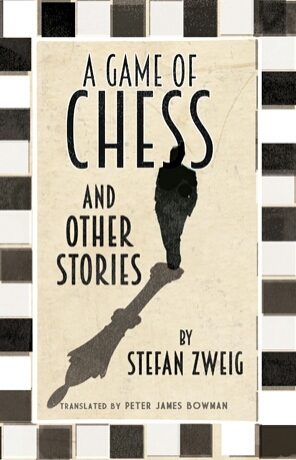
A Game of Chess and Other stories - Stefan Zweig

I'd dearly love to be able to take a month off work to enjoy autumn as it turns into winter, read a pile of the books that have already waited too long for some attention, and bake. It's not on the cards. Zweig is the kind of writer that really makes me wish it was otherwise though. It's not so much that I get so absorbed in his stories that I struggle to put them down, although there's an element of that, it's the threads of thought he unravels and I desperately want to follow through other books, but don't have the time to.

This collection is published by Alma Classics and includes 'The Invisible Collection' (brilliant), the novella length 'Twenty Four Hours in a Woman's Life', which explores infatuation and addiction, 'Incident on Lake Geneva' which specifically addresses the pointlessness of war, and 'A Game of Chess', Zweig's last story - written whilst in exile in Brazil.

'Twenty Four Hours in a Woman's Life' is set pre World War One. In a hotel on the Riviera a group of guests fall into argument over an unfolding scandal; a previously respectable married woman has run off with a young man she's had but a couple of conversations with. Partly to play devils advocate our narrator defends her, which leads a fellow guest to confide a story from her past to him.

As a middle aged widow she tried to help a young gambler, the situation quickly spirals out of her control, and she finds herself behaving in ways she scarcely understands, and which will characterise how she sees herself - at least until this confession. It's got Zweig's trademark pathos and compassion running all through it.

'A Game of Chess' by comparison is full of anger barely contained by Zweig's elegance of style, there is nothing to soften the story as it unfolds (as there is in The Invisible Collection) just a stark portrayal of how effectively cruel fascism is.

Altogether this is an excellent place to start if your unfamiliar with Zweig - the stories are a good cross section (I'm saying that with all the authority of someone who has read one novel and 4 other stories before this) and it's a very reasonably priced edition (rrp £4.99), and a nicely judged collection if you don't already have the stories elsewhere. The more I read Zweig, the more I like him.


Thursday, October 26, 2017

Leighton House Museum for Alma-Tadema

We've been meaning to go to Leighton house for years, but it's just far enough out of the way (Holland Park) for there to never be quite enough time to get there when we're in London. D particularly wanted to see the Alma - Tadema At Home in Antiquity exhibition though (has a soft spot for him), and as this is its final week we made the effort.

The exhibition was excellent, I'm not quite the fan that D is; the classical settings that Alma-Tadema is best known for don't particularly excite me, but the chance to evaluate him as an artist did. Something that was really fascinating was seeing how a technically very accomplished artist could still make a real hash of some things - there are figures in some of the paintings which just don't look right. In life and as a group it's also really striking how respectably Victorian his classical ladies look.

The big discovery was that Alma-Tadema's wife and daughters were accomplished painters, and are well represented here. There's something really encouraging about that - they're all part of the same story, he clearly fostered their talents, and the overall impression is of a wonderfully creative and colourful household.

Anothet thing I hadn't really understood is how much Alma - Tadema's vision of the classical world has informed filmmakers either - understandable in the early days (there are clips from films, some of which are roughly contemporary with his life, or from within a couple of years of his death) but somehow surprising when you see how Ridley Scott clearly references him for 'Gladiator'.

Meanwhile Leighton house is amazing. Unfortunately they don't allow photos (which I respect when it comes to other people's pictures, but find frustrating when it applies to architectural details). Built for Leighton and continuously added to throughout his life, it became a museum not long after he died, but had suffered somewhat over the years. A major refurbishment in the last decade has done its best to restore the original decorative scheme. Do a quick search for images, you won't be disappointed.

Leighton, who never married, only ever had one bedroom built (excluding servants quarters in the basement), so the house is mostly spaces for public entertaining, or for working in, with the stars of the show being the Arab hall, and the narcissus hall. Opulent is the word for these. The Arab hall with its gilding, beautiful tiles, fret worked shutters, stained glass, pool, and cushioned recesses for lounging is straight out of the Arabian nights. The glorious blue of the Narcissus hall has tiles the same shade of blue as a stuffed peacock that sits on a pedestal half way up the stairs - next to a sort of built in sofa with the fattest cushions I've ever seen (not only no photos, no sitting either). It's all utterly magnificent - and now we know where it is we'll go back.

Wednesday, October 25, 2017

How to be a Kosovan Bride - Naomi Hamill

'How to be a Kosovan Bride' is Hamill's debut novel, in it she follows the lives of two teenage girls from the same village; the Kosovan Bride of the title who marries into a family as traditionally minded as her own, and the Returned Girl, sent back to her family on her wedding night when her new husband suspects she isn't a virgin.

The Kosovan Bride moves into a house with her in laws, soon finds herself pregnant, and with a future fully mapped out for her. The Returned girl is in relatively unchartered territory and seizes the opportunities that her new set of choices bring her.

Hamill's knowledge of Kosovo comes from the visits she's made there working with a U.K charity, the lingering legacy of the war, and the persecution of ethnic Albanians threads through the book both in the form of the early memories of the girls, and the stories they manage to get their families to share. This is all the more powerful for focusing on the everyday reality of life for very ordinary people in extraordinarily difficult circumstances - it's a stark portrayal of the reality of life as a fugitive or refugee.

For the Kosovan Bride the difficulty is in reconciling the hopes and expectations of a contemporary girl, familiar with social media, and images of a world far beyond her village, with the reality of a very traditional marriage and equally rigid expectations. It's a society that sets a very high value on honour and where blood feuds and a general threat of violence are not just a possibility, but a very real threat. Hamill makes it easy to understand why that tradition is so important to the generation that made it through the conflicts of the late 1990's, and to their children as well. She also makes it clear that that tradition is quite a burden for bright young women to accommodate.

For the Returned girl there's the chance to turn her back on some of those traditions, she finishes School, goes to university, plans a different life for herself, meets men on her own terms, starts to write the stories she hears of the past, and finds her own ways to reconcile what she wants with respect for her family's traditions.

The book has the rhythm of a set of fairy tales, and actually also incorporates a traditional fairy tale within it. It's sparse, and effectivley repetitive delivery is both utterly compelling and powerful. It also made me realise that despite knowing some Albanian refugees back around 2000, I know woefully little about this part of recent history. Altogether a remarkable book.


Sunday, October 22, 2017

Sunday and some Books to look forward to in 2018

It's been a busy old week work wise, partly because our buyers threw us a big tasting session on Friday. This involves a trip to London and as it's a day out of the shop it has a real holiday feel to it, it's also a chance to bitch with colleagues about all the things that frustrate us (currently this mostly seems to be a lack of Chablis), and try some excellent wines. The last is important, it might sound like pure self indulgence to spend an afternoon getting re-acquainted with Krug, Taittinger Comte de Champagne, Veuve's Grande Dame, and Pol Roger's Cuvée Winston Churchill (my personal favourite  against some stiff competition, I could have reported on the current vintage age of Dom Perignon too, but some rotter finished it before I got a look in) but you have to spit, and this is the stuff that customers want to know is worth the money. Somebody has to do the research.

It would have been even more fun (it's the highlight of my working year) if I hadn't been coming down with a cold - a blocked nose makes tasting very hard, but I did my best. Happily I got to recuperate whilst dog sitting for my mother. It was a perfect combination of fresh air whilst I was walking her, and napping on the sofa when I wasn't, and now I'm back home with the Oxford University Press trade catalogue for the first half of 2018, and a cup of the best hot chocolate I've ever had the pleasure of meeting. It's Kate Young's Chocolatl recipe (inspired by Philip Pullman's Northen Lights) and is the perfect combination of thick creamy chocolate, aromatic spice, salt, and a couple of things you'll need to check the book for. It's just wonderful.

Also wonderful is the OUP trade list. It's a toss up between this and the British Library list as to which is my favourite (both have a particularly high ratio of the kind of books I get particularly excited about). So wonderful I'm here to share my personal highlights.

I'm intrigued by 'Prohibition a concise history', by W. J. Rorabaugh. I'm interested in the cultural history of alcohol generally, the idea of the Prohibition era is evocative, but I really don't know enough about it.

Patricia Fara's 'A Lab of One's Own' is being published to help mark the centenary of women gaining the vote in this country, and it sounds timely. It looks at the women who stepped into the labs during the First World War, women who carried out pioneering research, and were then unceremoniously pushed back out of the lab again when the men returned. Stories like this need to be told, both to inspire, and to challenge the prejudices that still limit women in science.

Jane Stevenson's 'Baroque Between the Wars' promises to take a fresh look on the arts between 1918-1939 and explore how baroque offered a completely different way of being modern. I think this one sounds fascinating.

There are also more of the beautiful cloth bound hardback Oxford editions coming out. These books are gorgeous so I'll be very tempted at the prospect of replacing my tatty old paperback copy of 'The Mabinogion' (which I think I really need to read again), and it will clearly be the year to finally discover the weird fiction of Arthur Machen (The Great God Pan and Other Horror Stories).

It's the bicentenary of Emily Brontë's birth next year too, so there's an updated reissue of 'The Oxford Companion to The Brontë's'. I'm not the biggest Brontë fan, but even so this sounds desirable.

I'm still battling with Zola's 'The Sin of Abbé Mouret' (I will get there, but his take on rural life is both disturbing and heavy going. If ever there was a case of something nasty in the woodshed, and a man prepared to describe it in hysterical detail...) but that's not putting me off a sense of excitement about 'His Excellency Eugène Rougon'. I'm hoping Zola on court and political circles will be as good as Zola in 'Money'.

And finally, the book I'm really excited about. 'The Scarlet Pimpernel' is getting the World's Classics treatment. I have mentioned before how obsessed with this book I was aged about 11. I read it time after time, and whilst my enthusiasm for it has abated somewhat I'm still fond of it, I have never looked forward to reading the introduction of a book more.

Saturday, October 21, 2017

The Little Library Cookbook - Kate Young

I've occasionally read Kate Young's Guardian column where she matches recipes to books, but never got particularly excited about it - mostly because I was never particularly excited by the books that were featured when I saw it. Nevertheless I was quite excited when I saw a book was coming, and had put it in my wish list hoping someone might consider it as a Christmas present. Then yesterday I finally saw a copy (it's not made it to Leicester's Waterstones, but it was everywhere in London where I'd been wine tasting) and decided I really couldn't wait to get it.

I love the concept of matching books with food and drink (as demonstrated by the 100 odd books and booze posts to date that I've done here) finding that it adds another layer to your memories of a beloved book, and clear inspiration in the kitchen. I like the project element of it too as you search for just the right recipe to make the moment live.

Sometimes the choice is obvious, sometimes the links between text and food (or drink) are more personal. The most obvious food in literature is probably Proust's Madeleines (for which Young does indeed provide a recipe), but Edmunds's love for Turkish delight in 'The Lion, The Witch and The Wardrobe' must run a close second (recipe also included) and I bet it's a book that far more people have read.

Altogether there are 100 recipes divided by the time of day they might be eaten, some are things to make on a lazy weekend when there are hours to spare for pottering around making Marmalade (Paddington) and cinnamon buns (inspired by Donna Tartt's 'The Goldfinch'), or suggestions for porridge (The Secret Garden) which can be part of any but the most rushed morning routine. Also, and I wholeheartedly agree with Young on this, porridge doesn't have to be confined to breakfast.

And if you're thinking porridge isn't really worthy of a recipe, or that people these days are all too inclined to fill cookbooks with things that are scarcely recipes at all, then at least here it makes sense, because this is as much about a love of books, and a genuine love of food, as it is the recipes. It's a deeply engaging combination which provides a reading list as well as a recipe list, and encouragement to find the same kind of links in the books I too love.